

Solar PV vs. Offshore Wind: Which Technology Will Lead the Energy Transition?
Two technologies dominate the global conversation about renewable electricity generation: solar photovoltaics and offshore wind. Both have experienced dramatic cost reductions over the past decade that have transformed them from expensive niche energy sources requiring substantial subsidy to the lowest-cost options for new electricity generation capacity in a growing number of markets. Both are scaling rapidly, attracting enormous volumes of investment and deploying at an accelerating pace across diverse geographies. But they are also quite different in their characteristics, strengths, limitations and ideal deployment contexts. Understanding these differences — and the complementary relationship between them — is essential for energy professionals, policymakers and investors navigating the energy transition.
Professionals seeking to strengthen their expertise in renewable technologies and their practical applications can benefit from the Renewable Energy training course, which provides a comprehensive foundation in solar, wind, and emerging clean energy systems.
The Solar PV Revolution: Cost, Scale and Simplicity
The cost reduction trajectory of solar photovoltaics over the past 15 years has been one of the most remarkable technological learning curves in industrial history. The levelised cost of utility-scale solar PV declined by more than 90 per cent between 2010 and 2023, driven by manufacturing scale-up — primarily in China — improvements in panel efficiency, reductions in balance-of-plant costs and competitive auction mechanisms that have compressed developer margins. In many markets — including the Middle East, India, the United States and Australia — solar PV is now the cheapest source of new electricity generation on a pure levelised cost basis, with projects winning contracts at prices that would have been considered implausibly low just a few years ago.
The structural advantages of solar PV include modular scalability — systems can be deployed from a few kilowatts to hundreds of megawatts with no fundamental change in technology — a short development and construction timeline relative to most competing generation technologies, and declining manufacturing costs that benefit from a highly competitive global supply chain. However, solar PV generation is inherently intermittent — output is limited to daylight hours and is sensitive to cloud cover and seasonal variation — and the technology requires relatively large land areas per unit of energy output compared to offshore wind. Integrating large volumes of solar PV into electricity grids requires investment in flexibility resources — battery storage, demand response, transmission interconnection — to manage the mismatch between solar generation patterns and electricity demand profiles.
These integration challenges highlight the importance of Power Generation training courses, where professionals learn how different generation technologies interact within modern power systems and how to optimize performance and reliability.
Offshore Wind: Scale, Consistency and Decarbonisation Potential
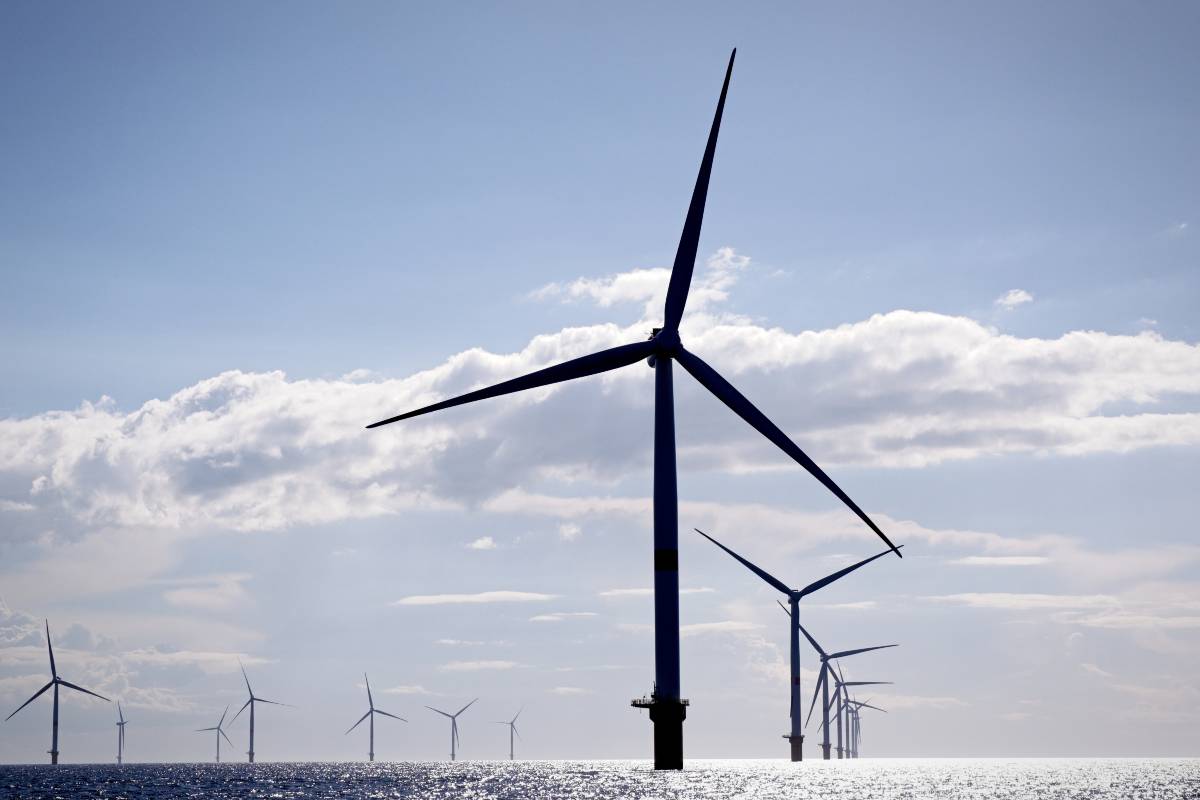
Offshore wind offers characteristics that complement solar PV in important ways. Wind resources at sea are typically stronger and more consistent than onshore, and offshore generation profiles are often more aligned with winter demand peaks in temperate climate zones than solar PV. Large offshore wind turbines — the latest generation exceeding 15 MW in nameplate capacity — can generate electricity at capacity factors of 45 to 60 per cent in prime offshore locations, significantly higher than the 10 to 25 per cent typical of solar PV installations in mid-latitude markets. The ability to site very large turbines in open water removes many of the land use, visual impact and community opposition constraints that limit onshore wind development.
The cost reduction trajectory of offshore wind has also been dramatic, though from a higher starting point and with greater remaining cost reduction potential than solar PV. Fixed-bottom offshore wind — deployed in water depths up to approximately 60 metres using monopile or jacket foundations — has benefited from turbine scale, supply chain development and competitive offshore auction markets. However, the sector has faced significant headwinds since 2022: cost inflation driven by supply chain constraints and higher steel prices, and more recently, a sharp policy reversal in the United States where the Trump administration paused and, in some cases, revoked offshore wind project approvals, causing cancellations and delays that have materially reduced the expected US offshore wind pipeline. Outside the US, European and Asian markets continue to advance, but the uncertainty created by American policy reversals has increased the perceived risk profile of the sector globally and prompted developers and suppliers to ask harder questions about project bankability before committing capital.
Floating Offshore Wind and the Untapped Resource
Fixed-bottom offshore wind is geographically limited to relatively shallow water areas — primarily the North Sea, the Baltic, coastal China, the US East Coast and parts of East Asia. Much of the world’s best offshore wind resource, including the deep waters off Japan, Norway, the US West Coast, Australia and parts of the Mediterranean, lies in water depths beyond the reach of conventional fixed foundations. Floating offshore wind — where turbines are mounted on floating platforms anchored to the seabed — has the potential to unlock this vast resource but remains in the early commercial stages, with costs currently significantly higher than fixed-bottom technology.
The floating wind sector is targeting dramatic cost reductions as it scales, drawing on cost reduction pathways analogous to those that transformed fixed-bottom offshore wind economics over the past two decades. Pilot projects and commercial-scale pre-FEED studies are progressing in Norway, Scotland, Portugal, Japan and South Korea. Government support — in the form of contracts for difference, investment grants and regulatory streamlining — is widely considered essential to bridge the cost gap to fixed-bottom wind and to enable the first generation of commercial floating wind farms that will establish the supply chain and learning curve for broader deployment.
EXPLORE THE RENEWABLE ENERGY TRAINING COURSES OFFERED BY ENERGY TRAINING CENTRE
Complementarity and the Future Energy Mix
The framing of solar PV versus offshore wind as competitors for dominance in the energy transition is, in important ways, a false dichotomy. The most cost-effective and resilient decarbonised electricity systems will almost certainly combine both technologies — alongside onshore wind, hydropower, battery storage, interconnection and flexible dispatchable generation — because their different generation profiles, geographical strengths and cost characteristics make them highly complementary. Solar PV produces most during summer days; offshore wind often peaks in winter months and generates throughout day and night. A system with a balanced mix of the two — calibrated to the specific latitude, climate and load profile of the target market — will require less storage and backup capacity than a system dominated by either technology alone.
The pace and economics of the energy transition will be shaped significantly by how rapidly supply chains for both solar PV and offshore wind can scale to meet the enormous volume of annual deployment that net zero scenarios require. A powerful new demand driver is accelerating this urgency: the AI data centre boom. The extraordinary electricity demand from hyperscale computing infrastructure is driving technology companies to seek large-scale renewable energy procurement at unprecedented speed, creating a surge in corporate PPA activity and renewable capacity investment that is adding a powerful commercial tailwind to solar and storage deployment. Data centres could account for nearly half of US electricity demand growth through 2030, according to the IEA — a structural shift that is fundamentally changing the investment case for renewable energy and making the question of grid integration, reliability and storage the central challenge of the decade.
Conclusion
Solar PV and offshore wind are both essential components of the global energy transition, each with distinct advantages and limitations that make them more suitable for different applications and geographies. Rather than one dominating the other, the most likely future is a deeply integrated renewable energy mix that combines both technologies with storage, interconnection and flexibility services to deliver reliable, affordable, low-carbon electricity at the scale the world requires. For energy professionals, developing expertise in both technologies — as well as the system integration challenges they collectively create — is an investment in one of the most dynamic and consequential industries of the coming decades.
EXPLORE THE POWER GENERATION TRAINING COURSES OFFERED BY ENERGY TRAINING CENTRE
Related Training Categories
View All Categories



Related Training Courses
Popular Training Venues

Popular Training Categories




Explore More Training Insights
Discover expert tips, industry trends, and best practices to enhance your professional development journey.
View All Articles