

Tidal and Wave Energy: Emerging Marine Technologies on the Horizon
Array
The world’s oceans contain some of the largest untapped renewable energy resources available today. As governments, utilities, and energy companies accelerate investment in low-carbon infrastructure, tidal and wave energy technologies are receiving growing attention as part of the broader global energy transition. Although solar and wind power currently dominate renewable electricity deployment, marine energy technologies offer unique advantages that could support long-term energy diversification, grid resilience, and sustainable electricity generation.
Tidal currents, generated through the gravitational interaction between the earth, moon, and sun, and ocean waves, created by wind passing across the sea surface, hold enormous amounts of kinetic and potential energy. Engineers and renewable energy specialists have spent decades developing technologies capable of converting these natural forces into reliable electrical power. While commercial adoption remains limited compared with mature renewable technologies, the technical progress achieved in recent years demonstrates that marine energy could become an increasingly important part of future clean energy systems.
For professionals seeking deeper knowledge of sustainable power systems and emerging clean technologies, Renewable Energy Training Courses provide valuable insight into the technologies, engineering principles, and strategic developments shaping the future of the global energy industry.
The Growing Importance of Marine Renewable Energy
Marine energy is increasingly viewed as a strategic component of long-term renewable energy planning. Unlike fossil fuels, tidal and wave resources are naturally replenished and produce minimal operational carbon emissions. More importantly, tidal energy offers a level of predictability that few renewable technologies can match. Tidal flows follow highly predictable astronomical cycles, enabling energy generation forecasts years in advance.
This predictability creates several operational advantages:
- Improved grid planning and balancing
- Enhanced energy security for coastal regions
- Reduced intermittency challenges
- Better integration with existing renewable power systems
- Potential support for remote island communities
As countries pursue net-zero carbon objectives, governments and private investors are exploring how marine renewable technologies can complement solar, wind, hydrogen, and energy storage solutions within integrated low-carbon energy systems.
Tidal Stream Energy: Commercial Progress and Technical Potential
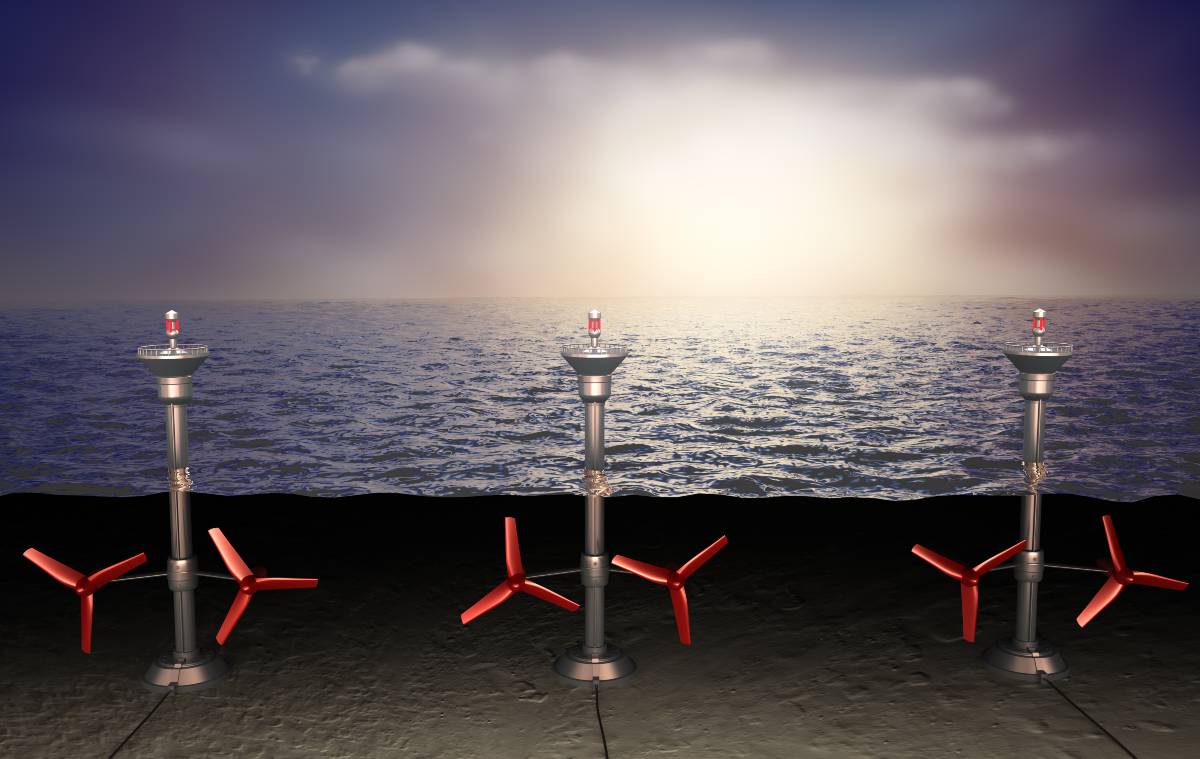
Among all marine renewable technologies, tidal stream energy has achieved the most visible commercial progress. Tidal stream generators function similarly to underwater wind turbines, capturing the kinetic energy of moving water in high-velocity tidal channels and estuaries.
Most tidal stream systems use:
- Horizontal-axis turbines mounted on the seabed
- Floating turbine platforms anchored offshore
- Vertical-axis rotor systems designed for bi-directional flows
- Subsea power transmission infrastructure
One of the most significant operational advantages of tidal energy is resource predictability. While wind and solar generation fluctuate based on weather conditions, tidal generation patterns remain exceptionally reliable. This characteristic makes tidal stream technology particularly attractive for energy planners seeking stable renewable generation profiles.
Several major projects have demonstrated the viability of tidal stream generation:
- The MeyGen project in Scotland’s Pentland Firth
- Orbital Marine Power’s O2 floating tidal turbine
- Nova Innovation’s Shetland tidal array
- Pilot projects in Canada, France, South Korea, and the Philippines
These projects confirm that tidal energy technology can operate successfully at meaningful scale. However, commercial expansion remains constrained by high capital costs, maintenance complexity, offshore installation challenges, and supply chain limitations.
Despite these challenges, the sector continues to benefit from increasing research investment, engineering innovation, and policy support aimed at accelerating renewable energy diversification.
Wave Energy Technology and Engineering Challenges
Wave energy technology remains at an earlier stage of commercial development than tidal stream systems. Ocean waves create highly variable, multi-directional mechanical forces, making wave energy conversion considerably more complex from an engineering perspective.
Unlike tidal currents, wave conditions vary continuously based on:
- Wind intensity
- Storm conditions
- Ocean depth
- Coastal geography
- Seasonal weather patterns
As a result, developers have explored numerous wave energy converter designs, including:
- Oscillating water columns
- Point absorber systems
- Attenuator devices
- Oscillating surge converters
- Submerged pressure differential systems
The diversity of designs reflects both the innovation potential and the ongoing uncertainty surrounding the most commercially viable technology pathway.
Several companies, including CorPower Ocean, AW-Energy, and Mocean Energy, have conducted extensive offshore testing programmes to evaluate:
- Device survivability
- Mechanical reliability
- Energy conversion efficiency
- Maintenance requirements
- Long-term operational performance
One of the most difficult engineering obstacles remains survivability during severe ocean storms. Wave energy devices must maximise electricity production during normal sea conditions while withstanding extreme weather events without catastrophic structural failure. Achieving this balance continues to be a major focus of marine engineering research.
Professionals interested in the technical, operational, and commercial dimensions of sustainable power development can strengthen their expertise through specialised Renewable Energy Training Courses that explore renewable technologies, energy transition strategies, and emerging low-carbon energy systems.
Government Policy and Investment Support
The commercial future of tidal and wave energy depends heavily on long-term policy support and sustained investment. Marine energy technologies still face higher costs than mature renewable energy solutions such as solar photovoltaic systems and onshore wind farms. As a result, many projects rely on:
- Government grants
- Innovation funding programmes
- Research partnerships
- Renewable energy incentives
- Dedicated clean energy auctions
The United Kingdom has emerged as one of the most active supporters of marine renewable development through:
- The Wave and Tidal Energy Programme
- Innovate UK funding initiatives
- Contracts for Difference support mechanisms
- The European Marine Energy Centre in Orkney
Similarly, the European Union has identified ocean energy as a strategic component of long-term energy transition planning. European funding initiatives, including Horizon Europe, continue supporting marine energy innovation, offshore testing infrastructure, and technology demonstration projects.
Industry analysts widely agree that stable policy frameworks represent one of the most critical requirements for marine energy commercialisation. Long-term investment confidence is essential for scaling manufacturing capabilities, improving supply chains, and reducing technology costs through industrial learning and deployment experience.
Niche Applications Creating Early Commercial Opportunities
Although large-scale marine energy deployment may still require further technological and commercial maturation, several niche applications already demonstrate promising near-term opportunities.
Tidal and wave technologies may provide significant value in:
- Remote island communities
- Coastal industrial facilities
- Offshore aquaculture operations
- Desalination systems
- Hybrid renewable microgrids
- Offshore monitoring infrastructure
In many isolated regions, marine energy systems could reduce dependence on imported diesel fuel while improving energy security and supporting sustainable economic development.
Island communities in Scotland, Canada, and Southeast Asia have already begun evaluating how predictable tidal generation can support local electricity systems with limited grid connectivity.
These smaller-scale deployments may play a critical role in helping marine energy developers refine technology designs, improve operational reliability, and reduce lifecycle costs before wider commercial adoption.
The Future of Ocean Energy in the Renewable Energy Transition
The long-term outlook for tidal and wave energy remains promising, although commercial expansion will likely occur gradually over the coming decades. The underlying energy resource is abundant, renewable, and geographically widespread. The primary challenge lies not in resource availability, but in achieving economically competitive electricity generation at commercial scale.
The marine energy sector must still overcome several barriers:
- High installation and maintenance costs
- Harsh offshore operating environments
- Limited industrial supply chains
- Technology standardisation challenges
- Financing and investment risks
However, many renewable technologies experienced similar developmental barriers during their early stages. Offshore wind power, for example, required decades of engineering advancement, manufacturing scale-up, and policy support before becoming commercially competitive.
As engineering capabilities improve and global investment in clean energy infrastructure continues expanding, tidal and wave technologies may eventually become important contributors to diversified renewable electricity systems.
For energy professionals, policymakers, engineers, and sustainability leaders, understanding the realistic opportunities and limitations of marine renewable technologies is increasingly important. A balanced, evidence-based understanding of tidal and wave energy supports better strategic planning, stronger energy policy development, and more informed investment decisions within the evolving global energy landscape.
Conclusion
Tidal and wave energy technologies represent some of the most innovative areas within the renewable energy sector. Although still in the early stages of commercial maturity, marine energy systems offer substantial long-term potential for clean electricity generation, energy diversification, and sustainable infrastructure development.
The sector’s future success will depend on continued engineering innovation, supportive government policy, long-term investment confidence, and the gradual transition from experimental prototypes to scalable industrial technologies. While tidal and wave energy are unlikely to replace solar or wind power in the near term, they could become valuable complementary resources within future low-carbon energy systems.
As the global renewable energy transition accelerates, marine energy technologies are likely to remain an important area of research, investment, and strategic energy development for decades to come.


Related Training Courses
Popular Training Venues

Popular Training Categories




Explore More Training Insights
Discover expert tips, industry trends, and best practices to enhance your professional development journey.
View All Articles