

Floating Offshore Wind: The Next Frontier in Clean Energy
Array
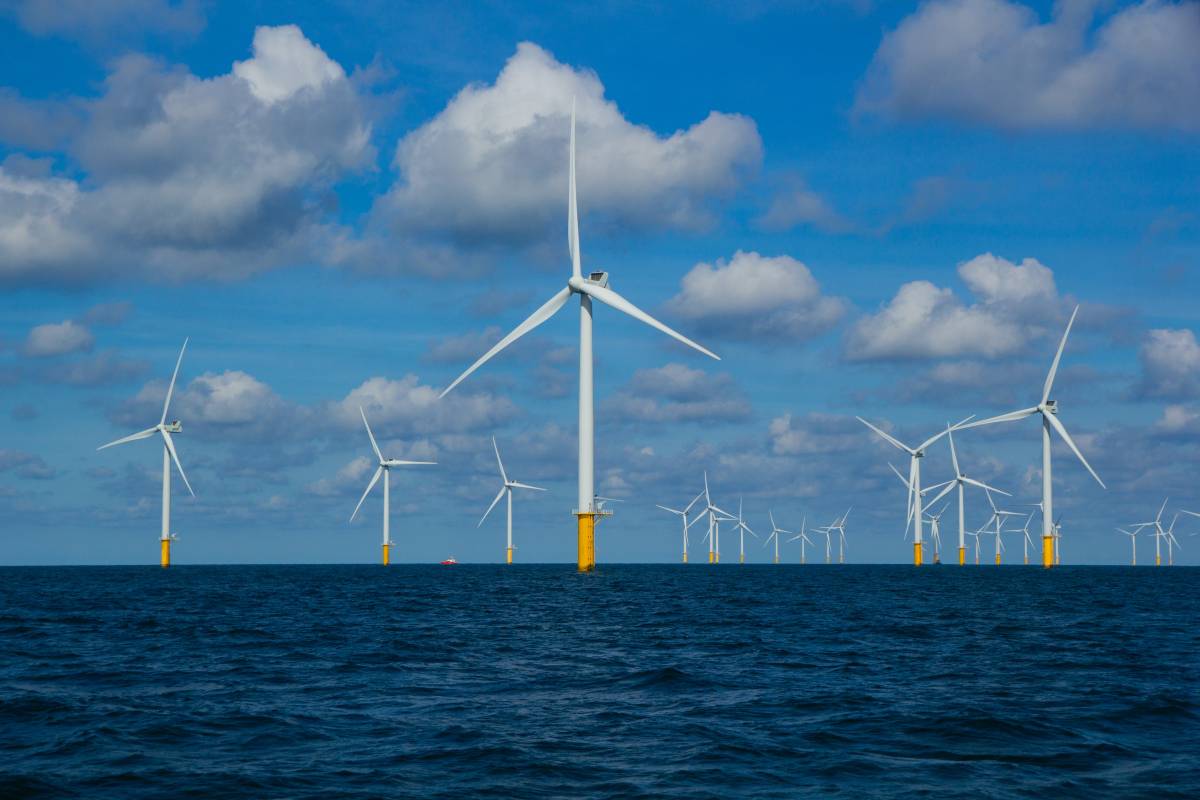
The global offshore wind industry has achieved a remarkable transformation over the past decade, growing from a small cluster of demonstration projects in the shallow waters of the North Sea into a mature, multi-gigawatt industry spanning five continents. Yet the most abundant offshore wind resources — those in deeper waters beyond the reach of conventional fixed-foundation technology — remain largely untouched. Floating offshore wind offers a pathway to this vast, largely unexploited resource, combining the proven performance of modern large-scale wind turbines with innovative floating platform designs that can be deployed in water depths of 50 metres and beyond. While still in the early commercial stages, floating wind is advancing rapidly and is widely expected to become a major contributor to global renewable energy capacity in the 2030s and beyond.
The Technology: Platform Concepts and Engineering
Floating offshore wind turbines are mounted on one of several floating platform concepts, each with different structural characteristics, motion behaviour, installation requirements and cost profiles. The three main platform archetypes are spar-buoy, semi-submersible and tension-leg platforms. Spar-buoy platforms — a long cylindrical hull ballasted to keep the turbine upright — offer excellent motion stability in deep water but require water depths of at least 100 metres and deep-draft installation vessels. Semi-submersible platforms — a triangular or hexagonal structure with three or more submerged columns — can be installed in shallower water and assembled at quayside, making them the most versatile concept and currently the most commercially advanced. Tension-leg platforms, moored to the seabed by vertical tendons, offer low motion response but require precise seabed conditions and are less flexible in deployment.
Mooring systems — chains, synthetic fibre ropes or steel wires connecting the floating platform to seabed anchors — are a critical element of floating wind design. Shared mooring and anchor systems, in which adjacent turbines in a floating wind array share anchor foundations, can significantly reduce mooring costs and seabed footprint compared to individual anchoring arrangements. Dynamic export cables — submarine power cables designed to tolerate the motion of the floating platform — represent another unique engineering challenge, requiring specialised cable management systems, bend stiffeners and fatigue-resistant designs that are more expensive than the static cables used in fixed-bottom applications.
Building Workforce Capability for the Floating Wind Era
As floating offshore wind moves from pilot projects to large-scale commercial deployment, the demand for skilled professionals across engineering, project delivery, marine operations and asset management is increasing rapidly. Developers, utilities, contractors and supply chain partners require personnel who understand not only conventional offshore energy operations but also the unique technical and commercial dynamics of floating wind systems. This has led to growing interest in renewable energy training courses focused on offshore wind technology, project development and operational readiness, helping organisations prepare their workforce for a fast-expanding market.
The multidisciplinary nature of floating wind means teams must combine expertise in structural engineering, subsea systems, power transmission, environmental compliance and commercial risk management. As a result, many organisations are investing in specialised renewable sector training courses covering offshore wind engineering, grid integration and sustainability strategy to strengthen internal capability and improve project execution performance.
Resource Potential and Geographic Opportunity
The geographic scope of floating offshore wind is vastly greater than that of fixed-bottom technology. Studies estimate that more than 80 per cent of the world’s offshore wind resource lies in water depths beyond the reach of fixed foundations. Countries that lack significant shallow-water offshore wind resources — including Japan, Norway, the United States West Coast, much of the Mediterranean littoral and Australia — stand to benefit most dramatically from the commercialisation of floating technology. Japan, with deep waters close to shore and a strong government commitment to offshore wind expansion, has been particularly active in supporting floating wind development, designating demonstration zones and providing fiscal support for first-of-kind commercial projects.
Norway, with its extensive continental shelf and experience in offshore oil and gas floating platform development, has also emerged as a leading floating wind location. The Hywind Scotland project — operated by Equinor in waters off the northeast coast of Scotland — was the world’s first commercial floating wind farm and has demonstrated capacity factors comparable to fixed-bottom offshore wind, validating the technical performance of the spar-buoy concept in real operating conditions. The experience and supply chain capabilities of the Norwegian and Scottish offshore oil and gas sector are providing a valuable foundation for floating wind project development, with vessel operators, subsea contractors and engineering companies adapting existing capabilities to the new application.
Cost Trajectory and Development Challenges
The current cost of floating offshore wind electricity is significantly higher than fixed-bottom offshore wind — estimates vary widely but figures of two to three times the cost of mature fixed-bottom projects are commonly cited for first-commercial-scale floating projects. The cost reduction pathway to competitiveness is well-understood and analogous to that achieved by fixed-bottom technology: manufacturing scale-up, standardisation of platform designs, optimisation of installation methods and development of dedicated specialist vessel capacity will collectively drive costs down as annual deployment volumes increase. Industry and government analysts project that floating wind costs could approach or reach parity with fixed-bottom wind on a levelised cost basis by the early 2030s if deployment scales as anticipated.
The development pipeline for floating wind faces several near-term constraints beyond cost. Planning and permitting regimes in many jurisdictions have not been adapted for floating wind, creating uncertainty and delay in project development timelines. Grid connection capacity in the deep-water coastal areas most suitable for floating wind is often limited, requiring significant transmission network investment. A specialist heavy-lift and installation vessel fleet suitable for floating wind turbine installation does not yet exist at the required scale, and the lead times for vessel construction are long. Supply chain development — particularly for large floating substructures that cannot practically be manufactured at a single centralised facility — requires coordinated investment in port infrastructure and fabrication capacity across multiple regions.
Policy, Investment and Industry Collaboration
Floating wind development is dependent on dedicated policy support to bridge the cost gap to commercial competitiveness. Several governments have recognised this and introduced floating-specific elements into their offshore wind support frameworks. The UK’s Contracts for Difference mechanism has included floating wind-specific auction rings since AR4 in 2022, providing a price guarantee that enables project financing despite higher costs. Norway’s Utsira Nord licence area provides a framework for commercial floating wind development with government co-investment. South Korea, the United States, France, Portugal and Ireland have all introduced measures to support floating wind project development, reflecting the growing recognition of its long-term strategic importance.
Industry collaboration is accelerating floating wind development through shared R&D, joint industry projects and pre-competitive knowledge sharing. The ORE Catapult, Carbon Trust, Sintef and numerous national research institutions are actively investigating cost reduction opportunities across all elements of the floating wind system — from platform design and mooring optimisation to installation methodology and operational maintenance approaches. Cross-sector collaboration with the offshore oil and gas industry — which has decades of experience with floating structures, subsea infrastructure and marine operations in challenging environments — is providing valuable insights and commercial opportunities for repurposing existing competencies in the service of floating wind growth.
Conclusion
Floating offshore wind represents one of the most exciting and consequential frontiers in renewable energy. By unlocking deep-water resources that are inaccessible to conventional technology, it could dramatically expand the geographic reach of offshore wind and enable countries without significant shallow-water resources to access abundant, high-quality renewable energy at sea. The technical challenges are real but solvable, and the cost trajectory is encouraging. The industry needs consistent policy support, coordinated supply chain investment and the transfer of offshore engineering expertise from adjacent industries to reach its commercial potential in the coming decade.
For professionals seeking to participate in the next phase of offshore wind growth, continuous learning will be an important competitive advantage. Alongside practical experience, participation in advanced clean energy training courses centred on floating wind, marine infrastructure and renewable project economics can help individuals and organisations respond more effectively to emerging opportunities in the global energy transition.

Related Training Courses
Popular Training Venues

Popular Training Categories




Explore More Training Insights
Discover expert tips, industry trends, and best practices to enhance your professional development journey.
View All Articles