

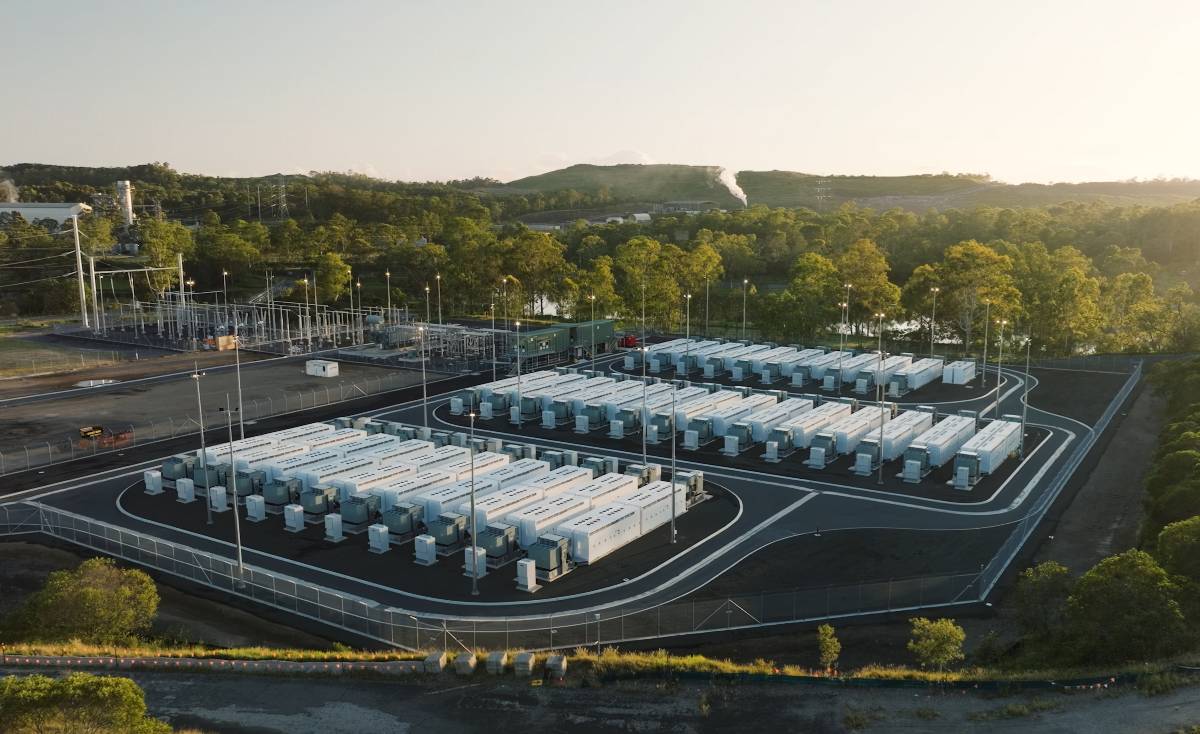
Battery Energy Storage Systems (BESS): The Key to a Stable Renewable Grid
Unlocking Grid Flexibility: How Battery Energy Storage Systems Enable Reliable Renewable Integration
As renewable energy penetration increases across electricity grids worldwide, the intermittency of solar and wind generation creates growing challenges for grid operators tasked with maintaining the instantaneous balance between supply and demand that the stability of modern electrical infrastructure requires. Battery energy storage systems have emerged as one of the most versatile and rapidly deployable solutions to this challenge, providing fast-responding, dispatchable capacity that can absorb surplus renewable generation, release stored energy during periods of scarcity and deliver the frequency and voltage regulation services that grids need to operate safely and reliably. The global battery storage market is growing at extraordinary speed, and the technology is transforming from a niche grid services tool into an essential component of the low-carbon electricity system.
As the role of battery energy storage becomes more central to modern power systems, the need for specialised knowledge in renewable integration, grid stability and storage technologies is increasing. Professionals looking to deepen their expertise are increasingly turning to specialised Renewable Energy Training Courses focused on grid-scale storage and energy transition technologies to better understand how BESS supports reliable and resilient low-carbon electricity systems.
How BESS Works and Why It Matters
A battery energy storage system, in its most common grid-scale configuration, consists of a large bank of lithium-ion battery cells arranged in modules and racks, connected to the grid through a power conversion system — typically bidirectional inverters — and managed by a battery management system and energy management system that optimise charging and discharging in response to grid signals, commercial dispatch instructions or automated control algorithms. The power rating of the system — measured in megawatts — determines how fast energy can be injected into or absorbed from the grid, while the energy rating — measured in megawatt-hours — determines how long the system can sustain that power output. The ratio between these two parameters, the duration, is a key design choice that determines the range of grid services the system can provide.
Short-duration BESS, with durations of one to two hours, are well-suited to frequency regulation, fast reserve services and peak shaving applications where the primary need is rapid power response over a short period. Longer-duration systems — four hours and beyond — are better suited to energy arbitrage, solar smoothing and the shifting of renewable generation from midday surplus periods to evening demand peaks. The economics of different duration configurations vary significantly across markets, reflecting local grid conditions, pricing structures and the specific revenue streams available. Many developers are designing systems with the flexibility to adjust effective duration through additional battery capacity additions, preserving optionality as market conditions evolve.
Lithium-Ion Dominance and Emerging Chemistries
Lithium-iron phosphate chemistry currently dominates the utility-scale BESS market, favoured for its combination of safety characteristics, cycle life, thermal stability and cost. LFP cells — manufactured primarily in China by companies including CATL and BYD — have benefited from massive manufacturing scale-up that has driven costs down dramatically. By early 2026, utility-scale battery storage equipment prices have fallen to approximately $117 per kilowatt-hour — less than a third of their level just three years prior — and annual global storage installations are expected to exceed 100 gigawatts for the first time in 2026, a milestone that underscores how rapidly BESS has transitioned from a niche grid services tool to core electricity infrastructure. This cost trajectory is expected to continue as manufacturing capacity expands, materials science improves and recycling infrastructure develops. Nickel manganese cobalt chemistry, which offers higher energy density, is used in some applications where space is constrained, but LFP has become the chemistry of choice for the vast majority of grid-scale applications.
Beyond lithium-ion, a range of alternative battery chemistries and electrochemical storage technologies are at various stages of development and commercialisation, targeting applications where lithium-ion falls short — particularly long-duration storage of eight hours or more, where the economics of lithium-ion become challenging. Vanadium redox flow batteries, iron-air batteries, zinc-based systems and sodium-ion batteries are all attracting R&D investment and pilot deployments. Vanadium flow batteries in particular are finding commercial niches in industrial and utility applications requiring long-duration storage and unlimited cycling without degradation, despite their higher capital cost per kilowatt-hour compared to lithium-ion.
Revenue Streams and Market Structure
The commercial model for grid-scale BESS projects is more complex than for generation assets, because a battery can provide multiple services simultaneously — or sequentially within the same operational period — and the value of those services varies dynamically with market conditions. Revenue stacking — combining income from frequency response contracts, capacity market payments, wholesale energy arbitrage and potentially behind-the-meter commercial arrangements — is the standard approach to maximising battery asset returns. In markets like Great Britain, where a range of ancillary service markets exist alongside the wholesale energy market, well-designed and operated BESS projects can achieve attractive returns even at current capital costs.
Regulatory and market design is therefore a critical enabler of BESS deployment. Markets that provide clear, long-term revenue certainty — through capacity market contracts, long-term ancillary service agreements or regulated rate structures — support the investment decisions necessary to deploy battery storage at the scale required. Markets with high renewable penetration, high price volatility and inadequate flexibility resources tend to offer the strongest revenue opportunities for battery arbitrage. As battery penetration increases, the arbitrage spread may compress in some markets, requiring continued evolution of market design and revenue mechanisms to sustain attractive returns for new investment.
In parallel with evolving market structures, workforce capability remains a key factor in successful BESS deployment. Engineers, project developers and system operators must navigate complex technical, commercial and regulatory environments. Enrolling in industry-relevant Renewable Energy Training Courses covering battery storage systems, grid integration and renewable optimisation provides the practical knowledge required to manage these challenges effectively and support large-scale implementation.
Safety, Lifecycle and Second Life
Fire safety is a significant operational consideration for large-scale BESS facilities. Several high-profile BESS fires — including events in Australia, South Korea and the United States — highlighted the risks of thermal runaway in lithium-ion battery systems and prompted a major review of design standards, fire suppression systems, siting requirements and emergency response protocols. The transition from NMC to LFP chemistry has substantially improved the safety profile of utility-scale systems, but robust fire detection, suppression and structural containment measures remain essential engineering requirements. Industry bodies including the National Fire Protection Association have published updated standards for battery storage safety that are being adopted into building codes and planning requirements in many jurisdictions.
The lifecycle management of battery assets — including performance degradation monitoring, replacement scheduling and end-of-life disposal or recycling — is an emerging operational discipline. Lithium-ion batteries degrade over charge cycles and calendar time, with capacity and power output declining gradually over a period of typically 10 to 15 years of operation. Second-life battery applications — repurposing battery modules from electric vehicles that no longer meet automotive range requirements — are being explored for stationary storage applications where lower performance is acceptable, potentially providing a lower-cost source of grid storage capacity and extending the useful life of battery materials. Battery recycling — recovering lithium, nickel, cobalt and other valuable materials for re-entry into the supply chain — is also developing rapidly as a necessary component of the sustainable battery economy.
Conclusion
Battery energy storage systems are rapidly becoming an indispensable element of modern electricity infrastructure, enabling higher levels of renewable energy integration, improving grid reliability and creating new commercial opportunities in the evolving electricity marketplace. As costs continue to fall and technology improves, BESS will play an even larger role in shaping the low-carbon grid of the future. For energy professionals, developing expertise in BESS technology, economics and grid integration is one of the most valuable investments they can make in their professional capabilities.
Related Training Categories
View All Categories


Popular Training Venues

Popular Training Categories




Explore More Training Insights
Discover expert tips, industry trends, and best practices to enhance your professional development journey.
View All Articles